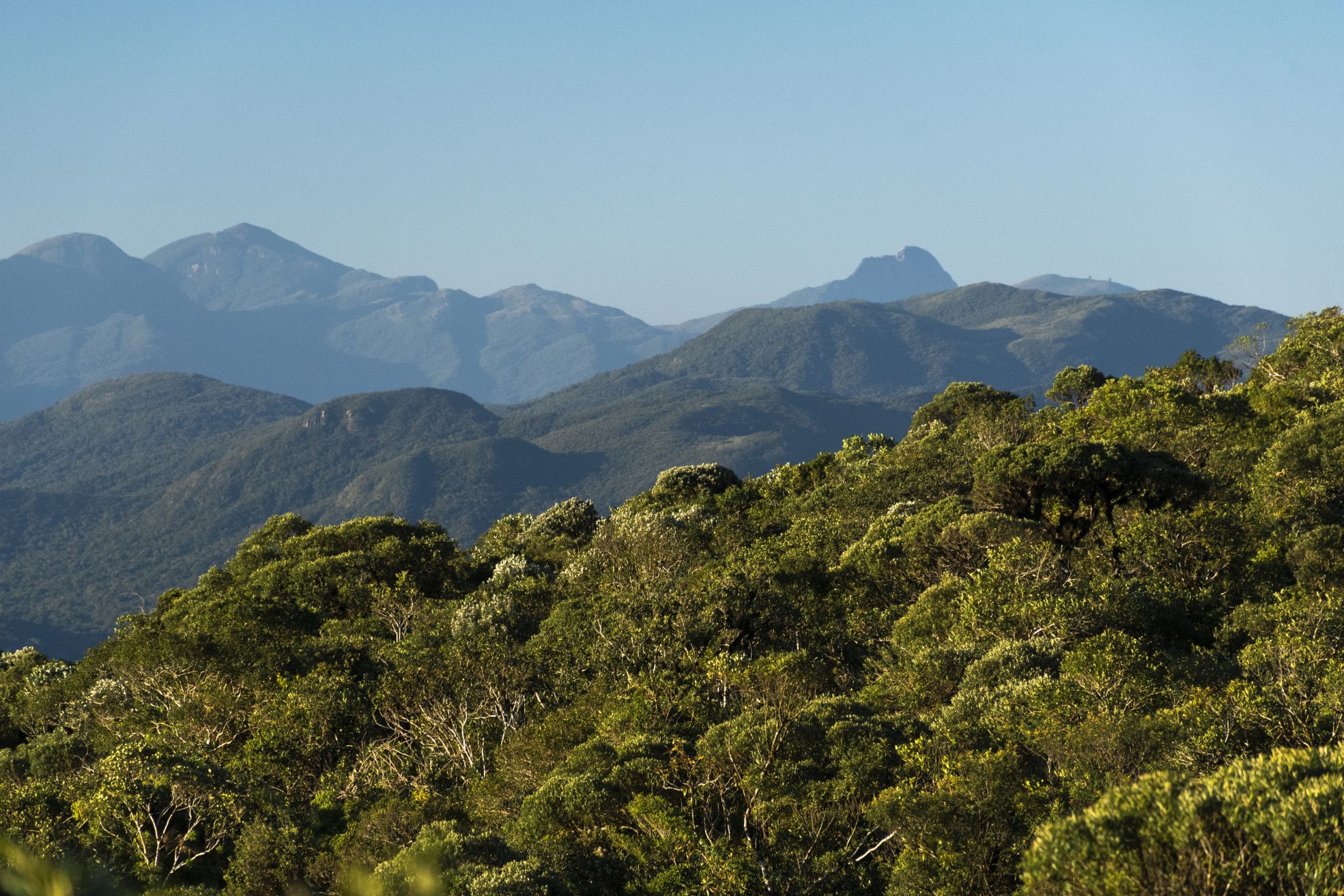
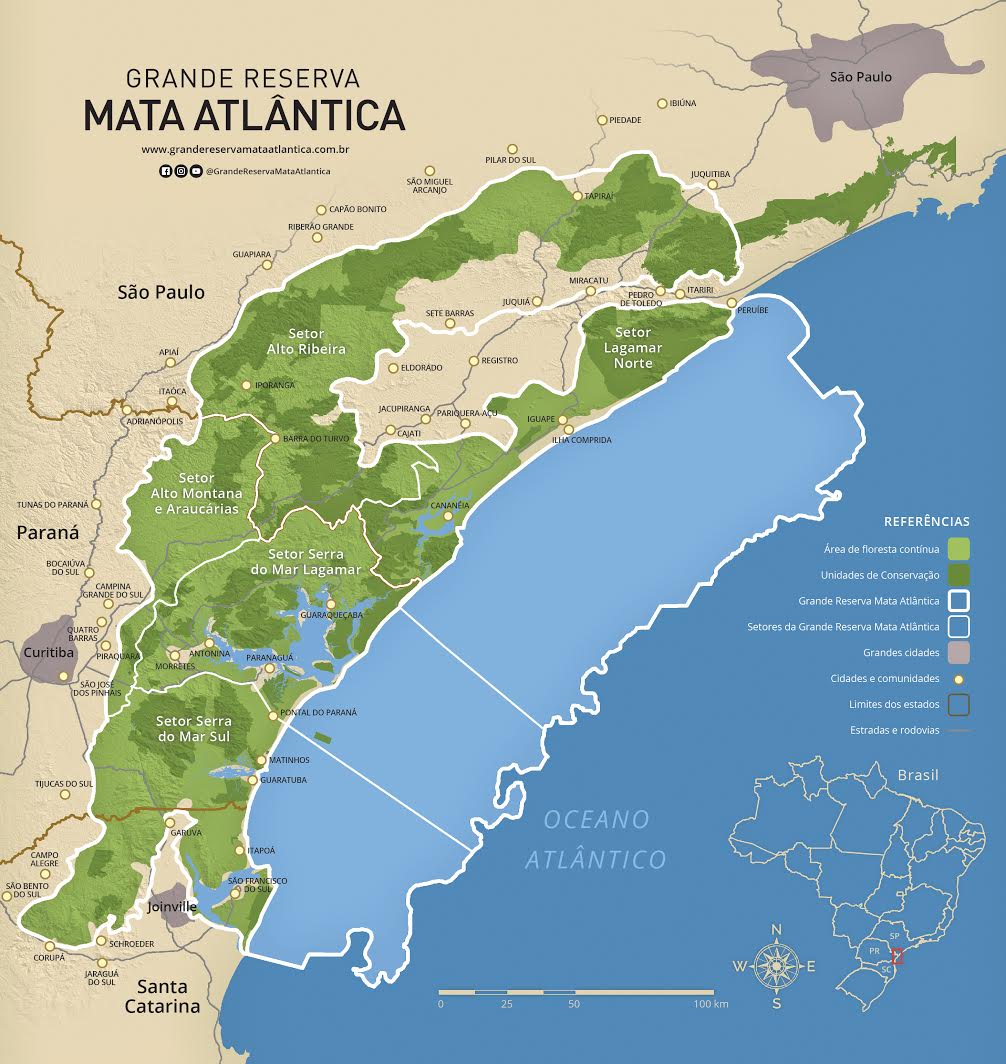
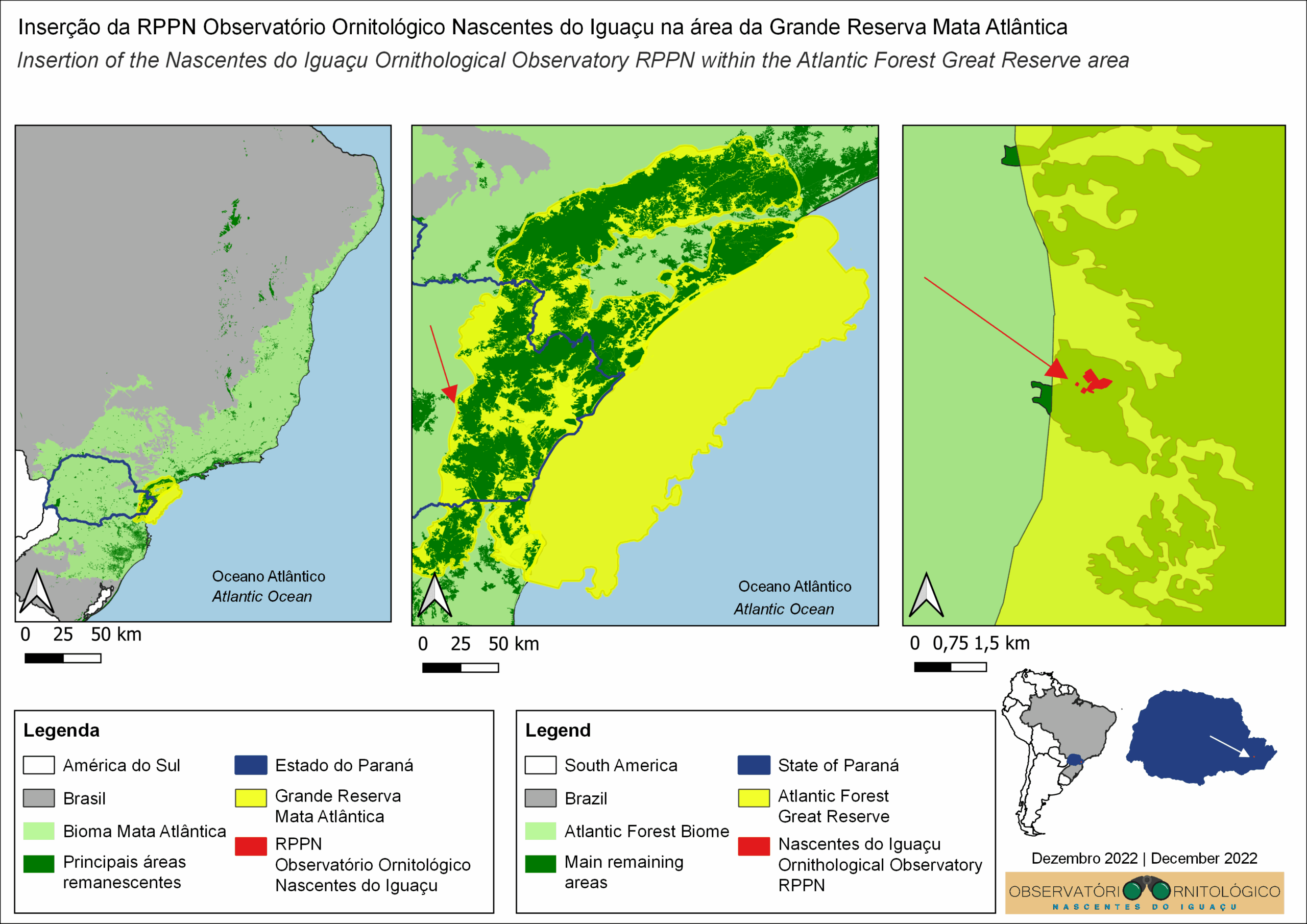
The Nascentes do Iguaçu Ornithological Observatory produces conservation results that extend beyond its 13 hectares. The RPPN is part of a group of more than 110 officially protected areas — technically known as Conservation Units in Brazil. These areas are inserted in a territory of more than two million hectares of continuous vegetation, together with another two million hectares of marine areas. It is the Atlantic Forest Great Reserve, whose perimeter in Southern Brazil extends to the south of the state of São Paulo, the east coast of the state of Paraná and the north of the state of Santa Catarina, the geographic area that forms the largest remnant of this biome that is so important to the planet.
In this environment, the protected areas aim to consolidate consistent results in biodiversity conservation, each one having high management standards and serving as refuge for fauna, flora and ecological processes. This mosaic enables the ecological connection, the transit of animal species and the dispersal of plants. The objective of the Atlantic Forest Great Reserve is not only the conservation of the natural heritage, but also of the historical and cultural heritage. In the 50 municipalities of its perimeter there are traditional communities, indigenous people, quilombolas (communities formed by escaped slaves in the past), caiçaras (typical communities in cost regions of Brazil), and family farmers.
Added to this is the proposition for lasting development based on economic activities that take advantage of and, at the same time, strengthen the maintenance of environmental characteristics and social traditions. The idea is: the more solid these attributes are, the more this unique region will acquire the capacity to induce investments and sustainable enterprises, generating jobs and income, as well as attracting researchers and tourists.
Following the Letter of Principles (in Portuguese) of the initiative, the Ornithological Observatory’s contribution to the Atlantic Forest Great Reserve is translated into the direct conservation of its physical area, in the reduction of pressures on the western limit of the Great Reserve (plateau), and also in the educational function that it fulfills with its visitors. The Observatory also contributes to the formation of ecological corridors, since it is located only 330 meters from the western limit of the Serra da Baitaca State Park, 1,000 meters from the Iraí State Environmental Protection Area, and 580 meters from the Piraquara State Environmental Protection Area. In addition, part of the Observatory’s perimeter is included in the Serra do Mar Heritage Listed area – an act signed in 1986, which sought to recognize the region as a public patrimony.
©2025 publicado pelo Observatório Ornitológico Nascentes do Iguaçu.
Créditos para fotografias: os autores das fotografias estão identificados junto às imagens.
Quando não há identificação, são fotografias do acervo do Observatório Ornitológico Nascentes do Iguaçu.
Conheça nossa Política de Privacidade.
Conheça nossos Termos de Uso.
To provide the best experiences, we use technologies such as cookies to store and/or access information on your device. Consent to these technologies will allow us to process data such as browsing behavior or unique IDs on this website. Not consenting or withdrawing consent may negatively affect certain features and functions. See our Privacy Policy. See our Terms of Use.